
|
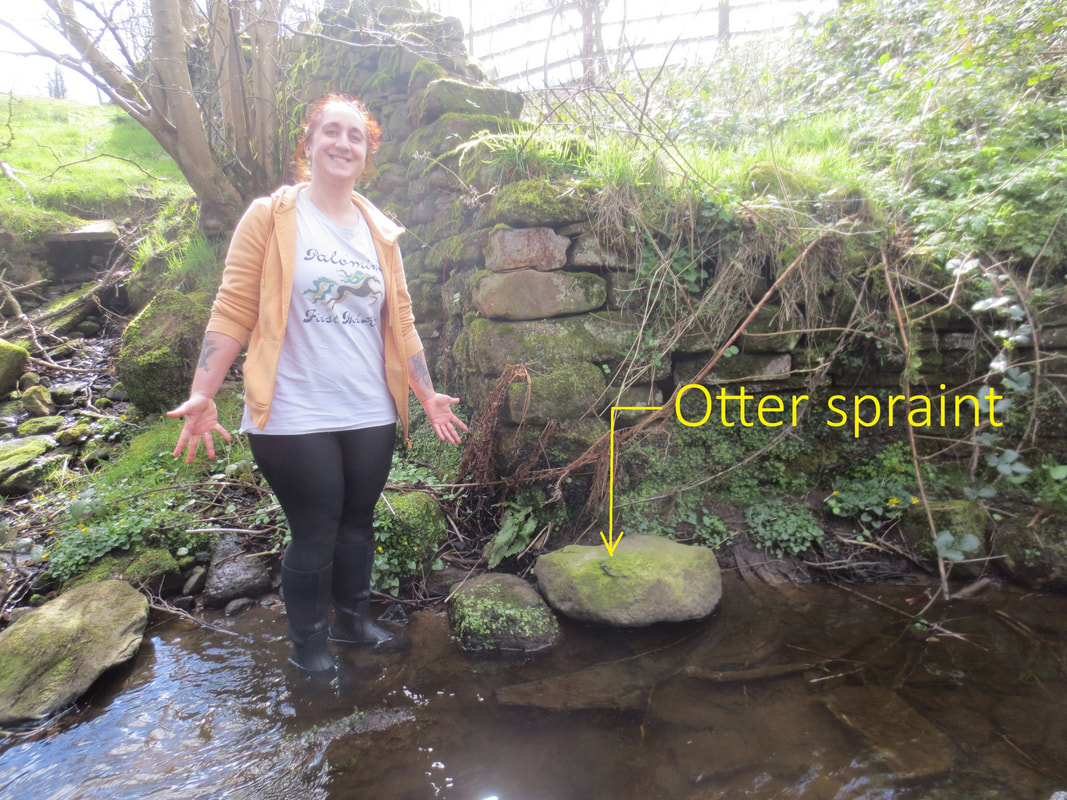
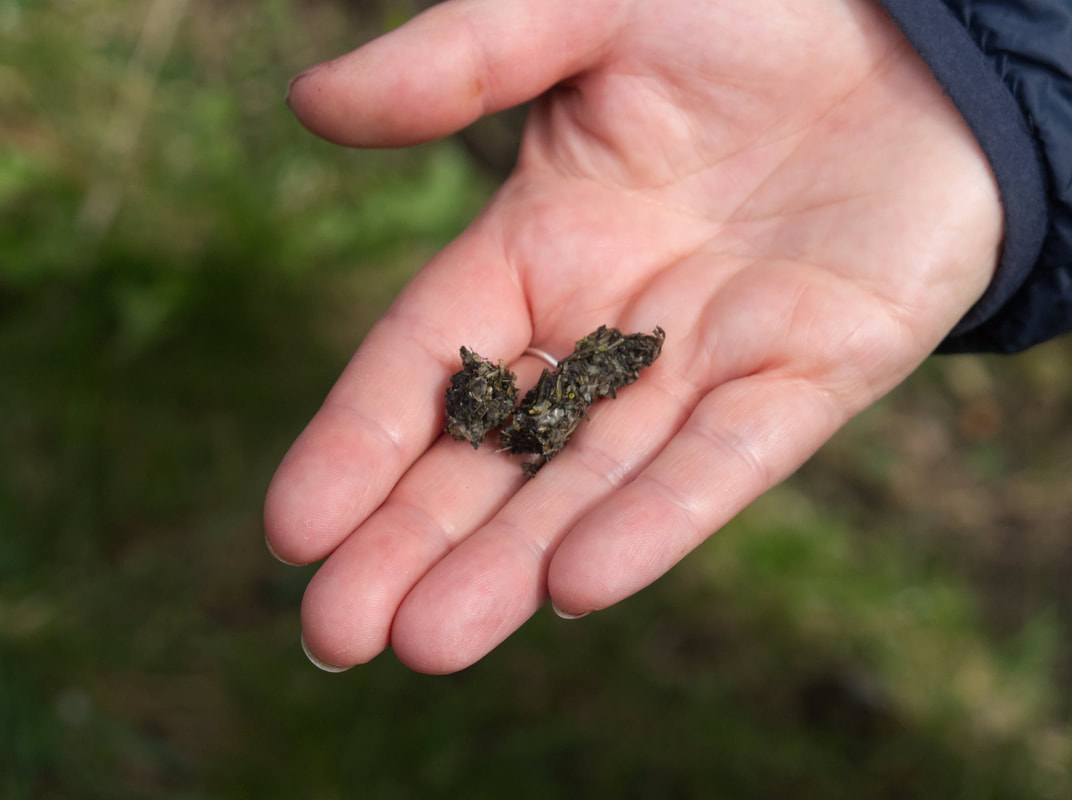
This spring RWF were out looking for otters along the River Worth catchment. We were surveying to try to establish the extent of otter activity along the river and it's tributaries. RWF member, Lucy Johnson, came on one of our expeditions, here are her impressions of the day. 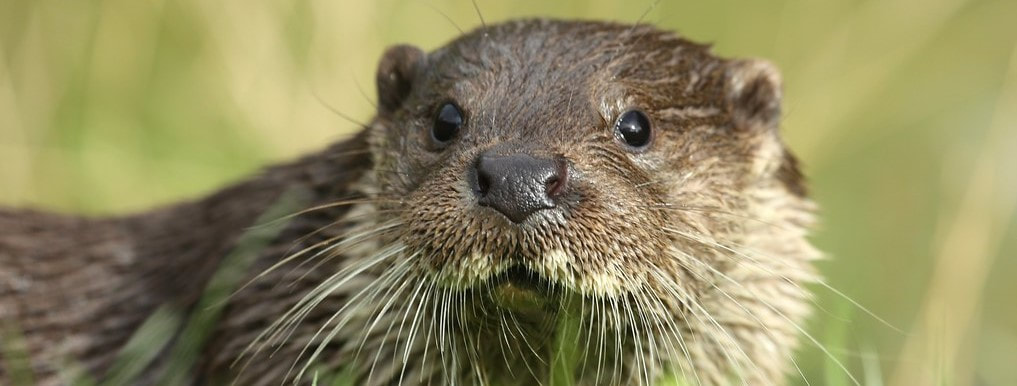 Lucy's blog River Worth Friends organised two otter surveys recently, and I jumped at the chance to attend the second walk and write it up. However, the god of environmental blogging doesn’t seem to have looked kindly on my involvement. I was initially hampered on the day by having had minimal sleep. Then my stomach muscles stuck their oar in by cramping so badly that I chose to leave the event halfway through, because the pain had prevented me taking anything in, much less writing it down. My cramps continued for a good two hours afterwards, so they weren’t solely caused by Sue’s brisk walk leading style. As a final flourish, the notes I did manage to take have completely vanished. So, please bear with me in writing a blog where I have either missed the highlights, am forbidden from writing about them, or have lost the notes. Otter surveys are a valuable part of keeping an eye on life in the river. If otters, apex predators, are present, it shows clean water, good fish stocks and suitable habitat. Otters were nearly wiped out in the mid-twentieth century in the UK, but are now found across the country. As otters are nocturnal, they are best spotted at dawn and dusk. To maximise your chance of seeing one, find a quiet stretch of river. Otters are often seen at National Trust sites, as detailed here: https://www.nationaltrust.org.uk/visit/countryside-woodland/places-you-can-spot-otters . Despite everything going wrong for me writing-wise on the day, I had had good intentions. Sue sent me a wealth of information to pore over, including maps, and a baffling (to me) sheet of footprints. I have poor visual memory so this particular item definitely wasn’t going to sink in, but I enjoyed looking at it, particularly as it implied otters the size of badgers. Maybe somebody should turn it into designer wallpaper. 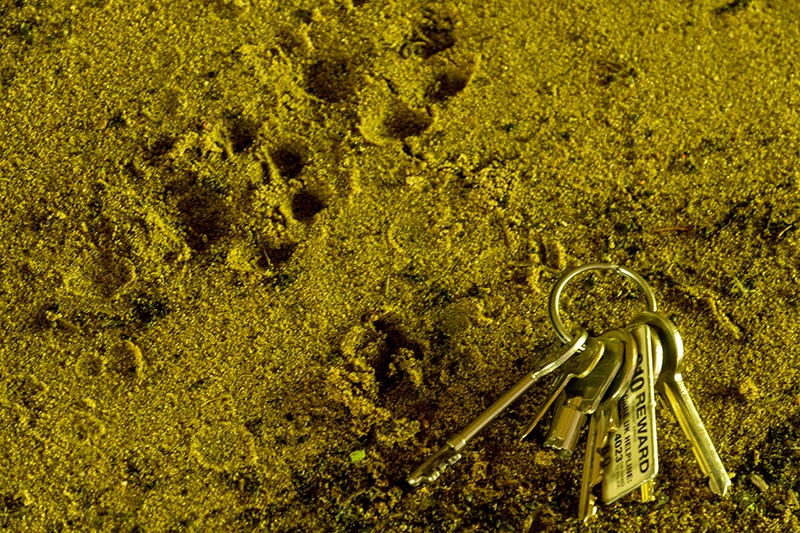 A pair of otter prints. The odds of otters assisting with the survey by attending in person were slim. The surveying technique seems to be, select a stretch of water, and carefully walk it, keeping an eye out for ‘spraint,’ with a jasmine scent and a black, cylindrical appearance, with bones visible. Pawprints are a possibility but not a given. If encountered, spraint should be left in situ as it plays an important role in marking territory. Some of the group met in Keighley Bus Station, where interesting conversation may or may not have been had. I can’t tell you, having lost my notes. Once on the bus, we regaled the bus driver and fellow passengers with stories of what we were up to, and met the rest of the group in Oxenhope. Sue quickly got us all shipshape, ran over the objectives and health and safety (I think the gist was if we fell in the water we’d have Sue to answer to), and we set off on a leisurely circuit through the highways and byways of Oxenhope. The dozen or so participants meandered along, Pragna enlivening the route by identifying all the birds in the vicinity. I didn’t take in the specifics of the route at the time, so I won’t attempt to reconstruct it now. Essentially, every speck of suitable habitat visible from Oxenhope was viewed, apart from a stretch in a housing estate considered a long shot. The area near the station was considered a possibility due to sightings by railway staff and volunteers. In the event, some mink scat was encountered here. 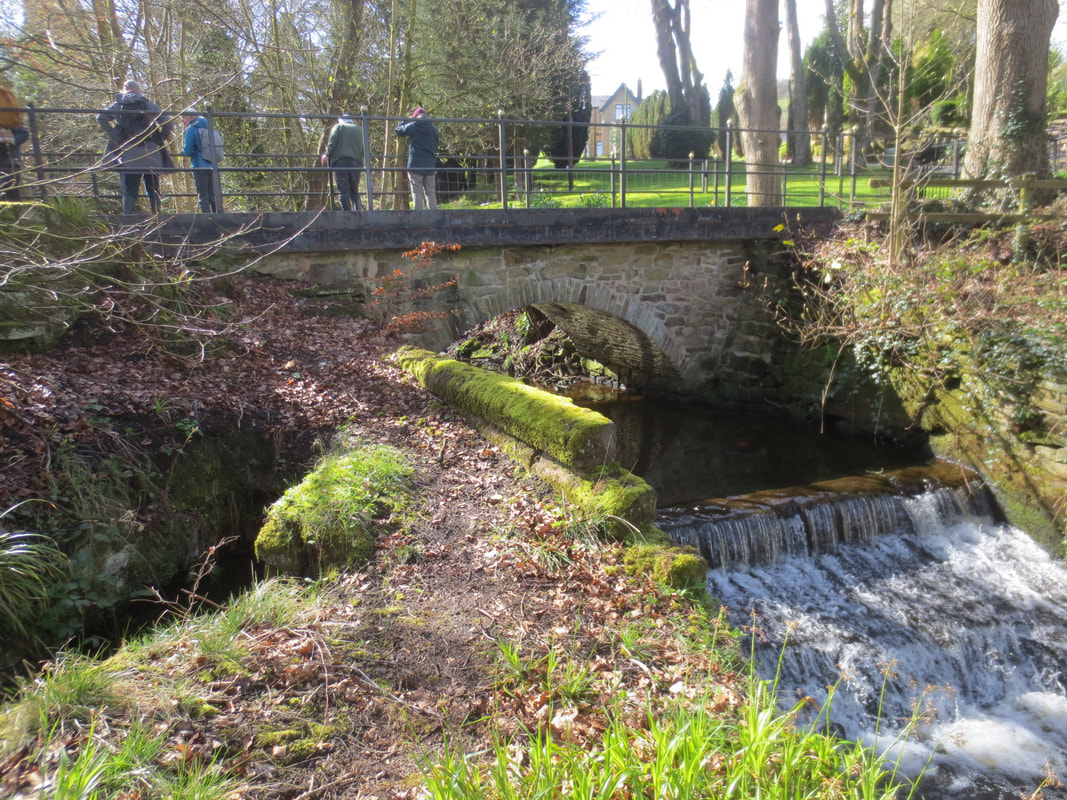 Searching intently.
walk. Between Oxenhope and Haworth four spraints were found, in three separate sites. Mission successfully accomplished. The results will be shared with ecologist Andrew Mather and West Yorkshire Ecology, and River Worth Friends members will continue to keep an eye out as they explore the area.
0 Comments
A few months ago we posted a blog about how we use electrofishing to monitor the fish population in the Worth and hence the ecological status of the river. This blog looks at another way of assessing the river ecology. 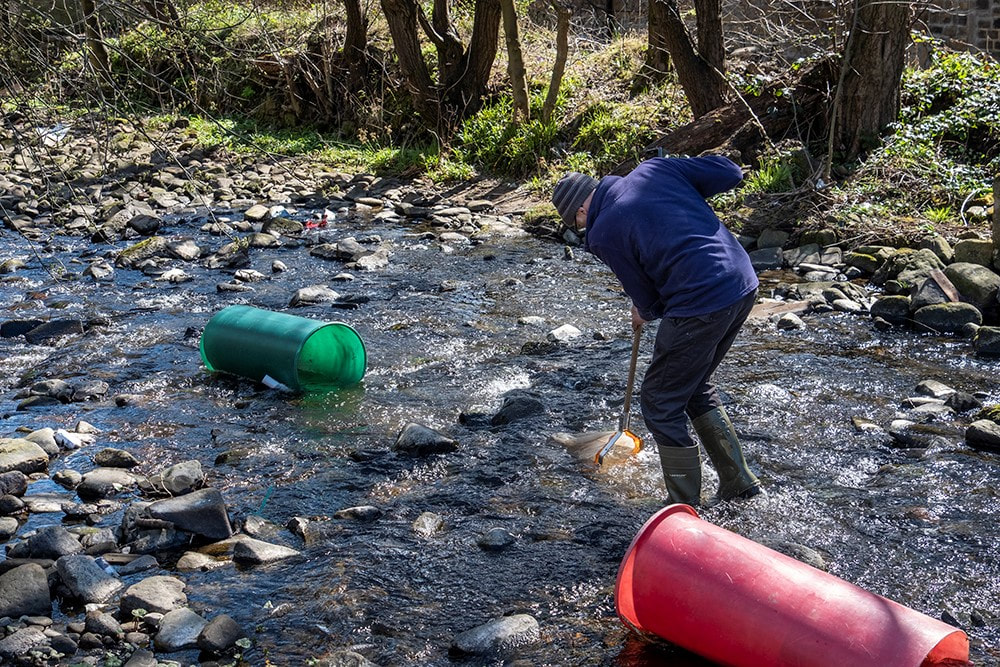 Kick sampling amoungst the debris in North Beck
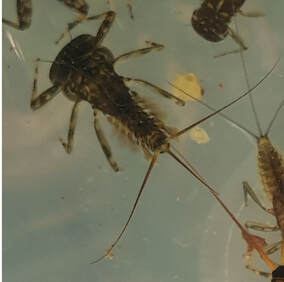
downstream net any bugs dislodged from under the stones. Monitors are looking for eight particular bugs which are especially sensitive to water quality, the counts are scored on a system established by the Anglers Riverfly Monitoring Initiative (ARMI) a drop in numbers below a certain trigger level may indicate pollution, resulting in further investigation by the Environment Agency. Monitoring results over time can also be a general indicator of trends in water quality.Riverfly monitoring has been happening on the Worth since 2016. Initially by RWF founder Phil Sheridan who worked as a one man band at Aireworth Grove until the Aire Rivers Trust took over co-ordination for the Aire and started training volunteer monitors in 2022. A number of RWF members are now trained and monitor sites up and down the Worth and it’s tributaries, we find it a useful way of checking water quality in the catchment. There are now samples sites at various locations along the Worth and tributaries:
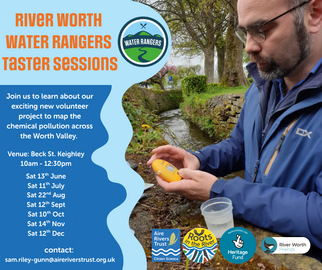
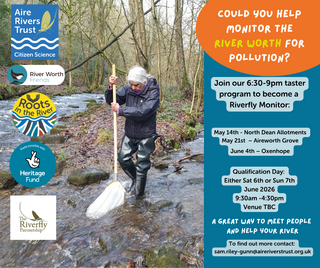
The main stem of the lower Worth running through Keighley scores on or above average for the Aire catchment which is positive. Bridgehouse Beck presents some limited concern. The site at its confluence with the Worth at Mytholmes returns a score just below the all Aire average and returned a confirmed trigger level breach in August 2025, during a period of extreme drought. This is likely due to high nutrient inputs from land-based run-off at the sampling site. ART and RWF are both keen to extend monitoring on the Worth, these flyers give more information. If you would like to get involved in maintaining the water quality of the Worth get signed up now.
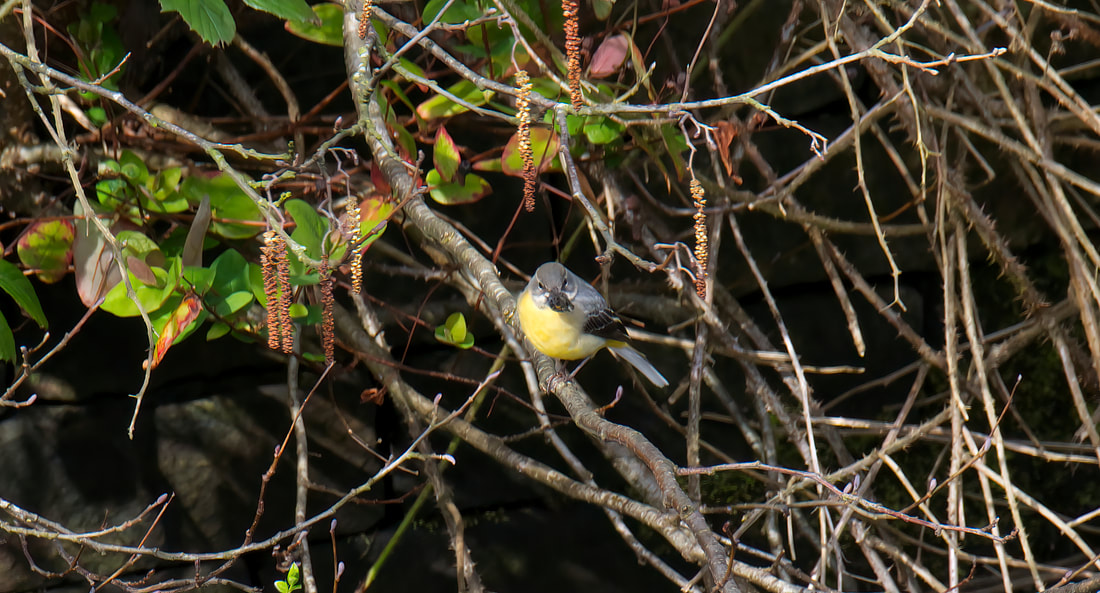
A couple of weeks ago we were sent a charming video of a dipper feeding a fledgling on the River Worth in Keighley. We were so impressed we asked the sender if he would like to write a blog about it for us and here it is. We hope that it will inspire people to get out along the river like Liam and really see the beauty in small things..... Liam's blog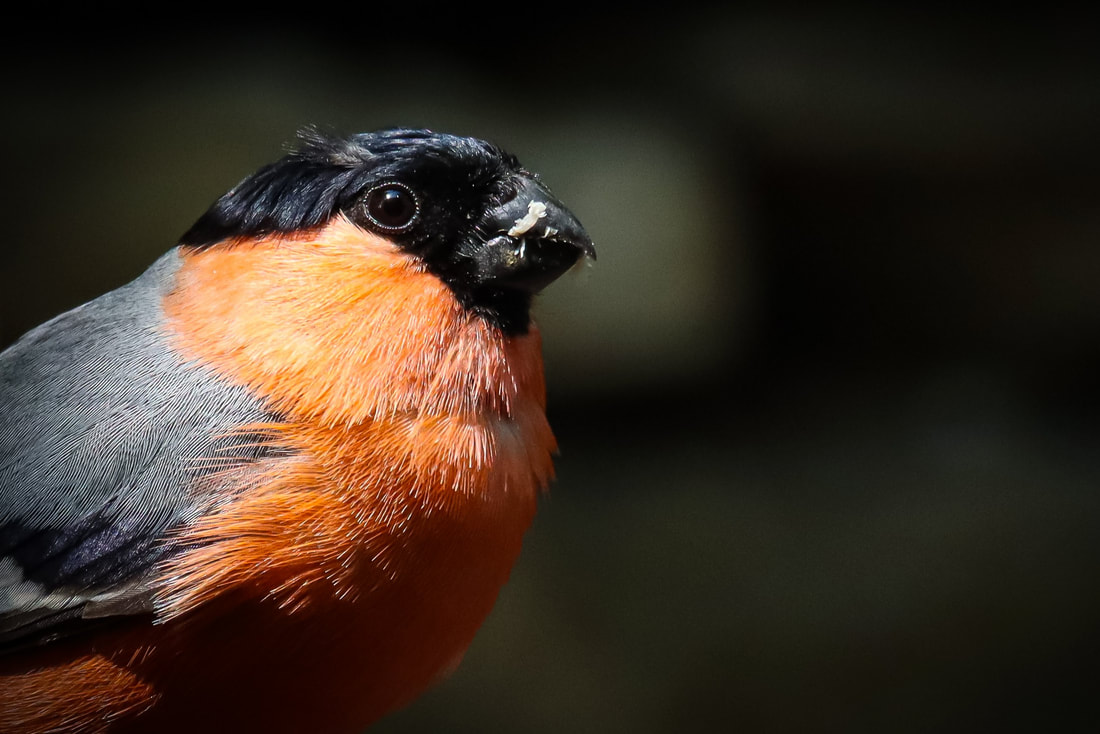 The bird that started it all - Bullfinch. You’re probably wondering who I am, so let’s start there. My name’s Liam. I’m 35, a dad, born and bred in Keighley, and—somewhat unexpectedly—I’m completely obsessed with birds. That obsession didn’t come from a childhood packed with countryside walks or a lifelong love of wildlife. In fact, if you’d asked me a few years ago about birding, I’d have probably shrugged and changed the subject. Everything changed in late 2021 when I moved into a new home beside the River Worth. For someone who now spends every spare moment outdoors, I’m almost embarrassed to admit that at first, I barely noticed it. The river was just… there. Background scenery. Something you glance at through a window and forget about entirely. Then one day in early 2023, during yet another afternoon working at my desk, something caught my eye. Perched proudly on my garden wall was a bird I’d never really looked at before—plump, confident, with a soft peach-coloured chest and a chunky beak that looked like it meant business. I’d later learn its name: Bullfinch. That moment was the spark. I’d always known there was a trail behind my house—one of those places you mentally file away but never actually visit. For reasons I still can’t explain, I decided that day to step outside and follow it. No expectations. No grand plan. Just curiosity. Within five minutes, I saw them again. Not just one Bullfinch this time, but several—chirping away, flickering through the branches, their colours bursting against the lush green of the woodland. I stopped in my tracks. I’d lived here all this time and had never noticed them. Never noticed any of this. That small stretch of woodland and that quiet, unassuming river cracked something open inside me. This was the moment I truly fell down the rabbit hole. 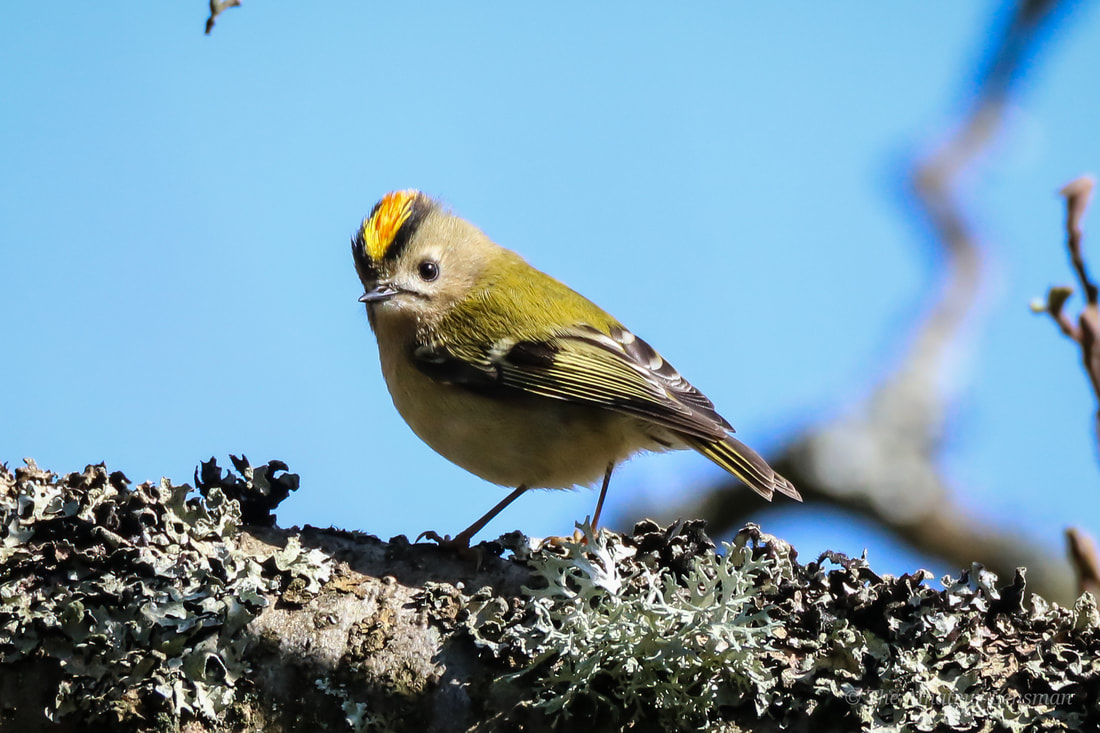 Goldcrest - the smallest European bird. The binoculars came next. Then—inevitably—an admittedly obnoxiously large camera lens. And just like that, my daily routine changed forever. Since then, I’ve been out almost every day. Before work. After work. Rain or shine. Always asking the same question: what might I see today? The answer is never boring. The biodiversity right outside my back door continues to amaze me. The seasons roll through—each one bringing new species, behaviours, colours, and moments that feel like they’re happening just for you, if you’re lucky enough to notice. So far, I’ve recorded well over 50 different bird species. My favourite? The Kingfisher—an electric flash of blue that rockets up and down the river like it owns the place. 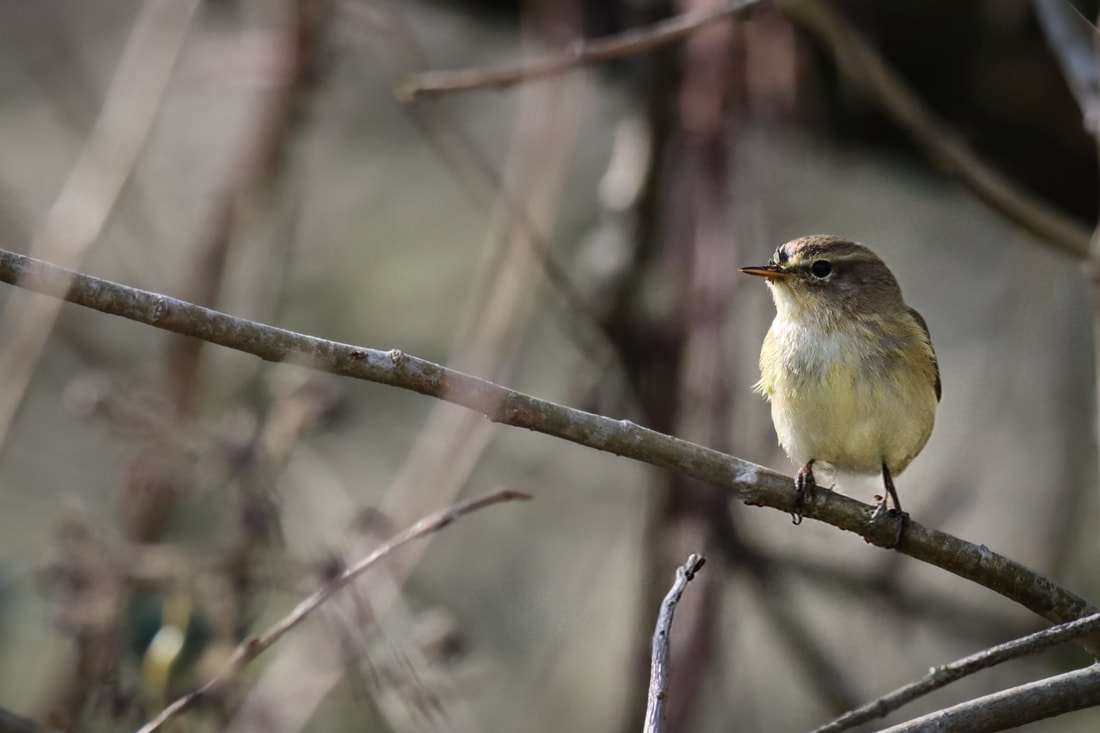 Chiffchaff - you can hear their chiffchaff calls along the river now. But this year, something happened that pushed this passion even deeper. I was doing my usual after-work walk—the kind I’ve done a thousand times without thinking twice. I heard it before I saw anything: the unmistakable, cheerful cheep of a Dipper. A sound that always makes me smile. As the call grew louder, the bird flew upstream and landed. Then I heard something different—a frantic, high-pitched commotion. I stopped. Sat down. Kept my distance. And then it appeared. A tiny Dipper chick emerged from beneath an overhanging tree, wobbling with determination, drawn out by the promise of food from its parent. Brave. Vulnerable. Perfect. I watched in complete silence as the exchange played out. No rushing. Just me and a moment that felt like a privilege rather than an accident. I stayed until the light faded, then quietly left them in peace. Moments like that make you realise how much we miss. People look at places like Keighley and see old mills and tired shop fronts. But if you take that first step outside—really take it—you’ll find wild, breathing, thriving worlds tucked into the cracks. Hidden in plain sight. That little Bullfinch opened a door I didn’t even know existed. Now it’s an obsession I share with my nine-year-old son and my girlfriend. The River Worth has become our home away from home. Huge thanks to River Worth Friends and the volunteers whose tireless work keeps this place alive—you’re genuinely incredible. So that’s me. A once-oblivious thirty-something, now a camera-wielding, bird-obsessed nerd—and honestly, I wouldn’t change a thing. And the best part? I feel like this journey is only just beginning. Thank you for reading, maybe we’ll bump into each other on the trail some time. All the pictures and video were shot by Liam on the Worth. To see more visit his excellent Instagram page - The Amateur Lensman 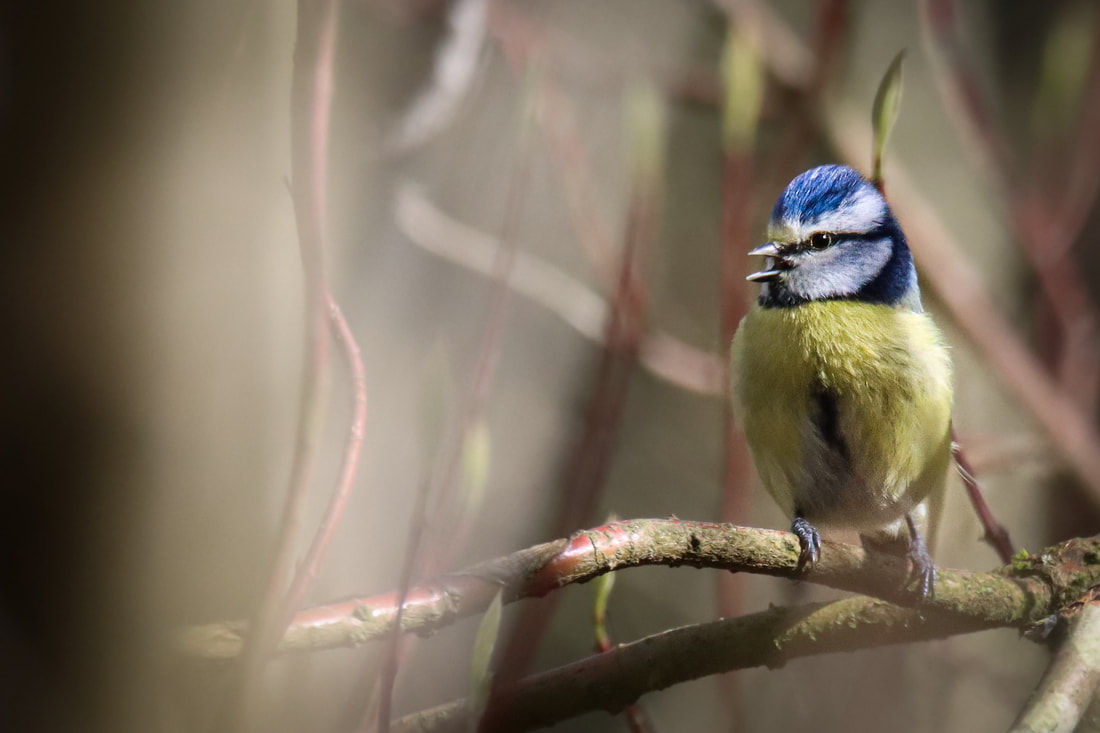 Bluetit |
Categories |
 RSS Feed