
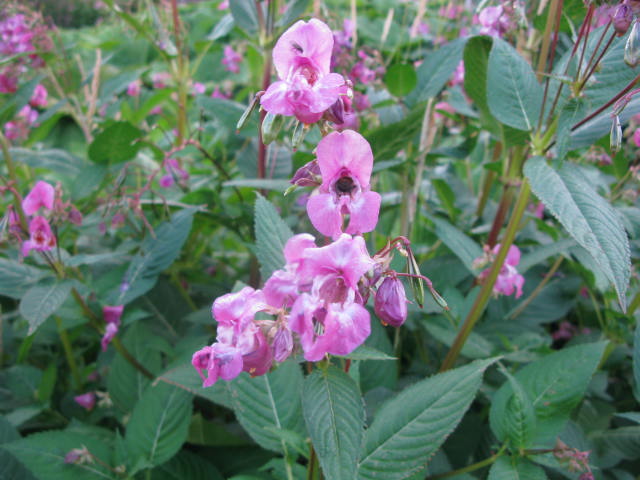
 In the last blog we mentioned a couple of invasive species, mink and signal crayfish, in this blog we will look at another, Himalayan balsam (HB).
There are two main problems with HB:
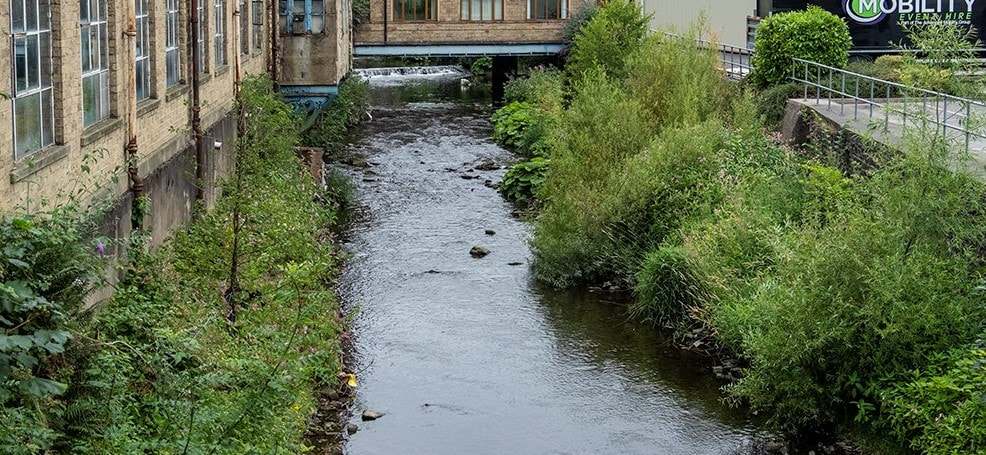 HB colonising much of the left bank of the river above the bridge at Pit Street. Picture courtesy of John Tickner.
It’s no good just bashing it in Keighley because every plant higher up the river can produce up to 800 seeds which can float down stream to re-colonise the cleared area. The problem is that this strategy requires considerable organisation and a lot of people to work persistently over many years (seeds can remain dormant in the soil for up to three years), resources that RWF do not have. So we are wondering if the war on Himalayan balsam on the Worth may have been lost.  HB taking over!
0 Comments
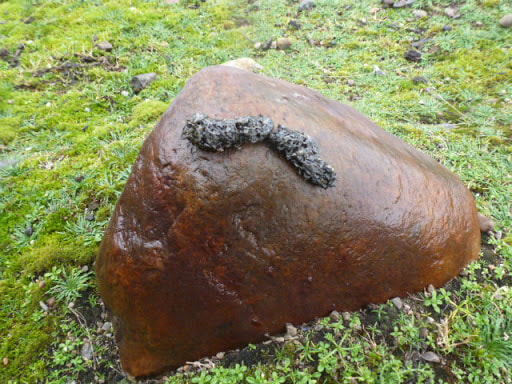
 Picture courtesy of Rob Withey Looking for ottersWe have been thinking about otters recently. Otters are quite difficult to spot, they are very furtive and not usually out and about during the day, their active time is between dusk and dawn. So the presence of otters is often established by what they leave behind rather than seeing the animal itself, what they leave behind are faeces and foot prints.
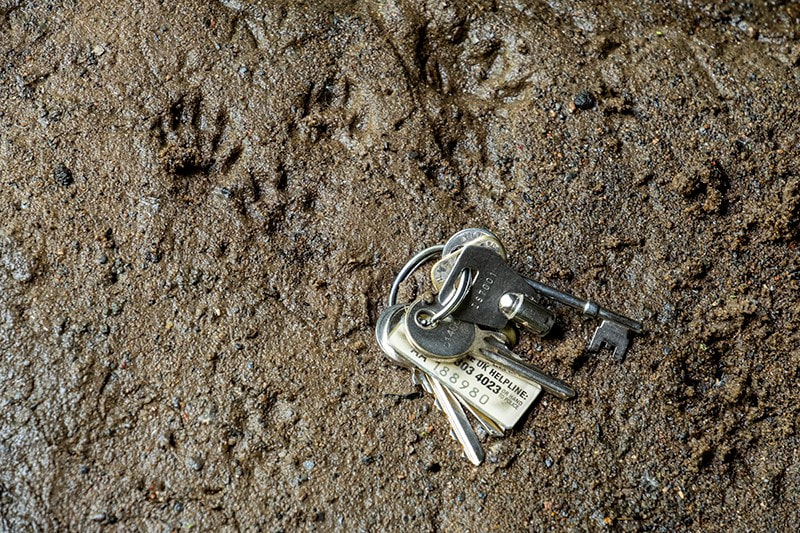
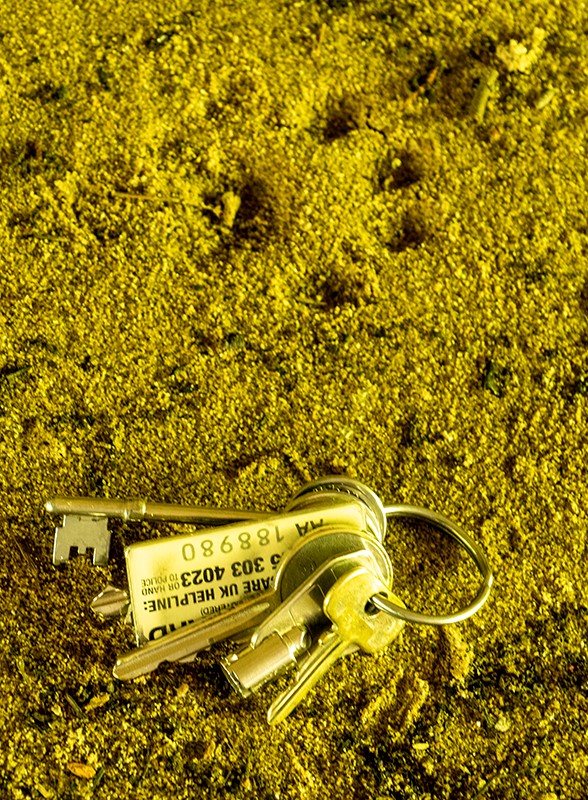
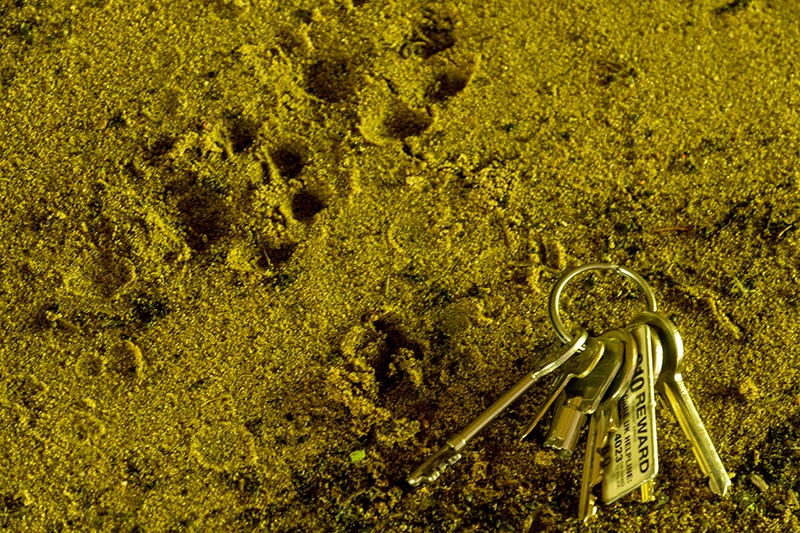
A couple of weeks ago we thought we had found what may be the decomposed body of an otter near Kinara Close, it had been in the river a while and was pretty disgusting! On further examination it turned out to be a goat’s skin! So two recent disappointments. Then RWF member, John Tickner, who likes nosing around the nooks and crannies of the river, spotted these prints under Vale Mill at Oakworth. The first ones we think are rat (small and pointy) or possibly mink, but the other two look very much like otter, they are bigger, otters prints are about 2” across, and show five toes.
So we think that otters are present on the Worth. However it is unlikely that they are resident here, more likely they pay us regular visits from their resident territory on the River Aire.  Otter on the Aire at Marley, photographed by RWF member John Tickner (copyright John Tickner). Have you seen an otter on the Worth or think you have seen signs of otters? Please let us know, we are keen to build an understanding of their presence on the river. Arguments about ottersWhy are RWF so obsessed with otters? I hear you ask! Well otters were present in many rivers in the British Isles until they went into a steep decline in the latter half of the twentieth century, mainly due to the use of organochlorine pesticides in agriculture which polluted the rivers and got into the otter’s food chain. With the outlawing of these pesticides in the early 1990’s and also the ban on hunting in 19768 otters have made an astonishing comeback, we would like to think that the River worth could be part of the comeback of this iconic species. We know there are advantages and disadvantages to the return of the otter and can now almost hear the cries of outrage from some in the angling community who think the otters are stealing “their fish”.  Otter doing what it does best - catching and eating fish.
are able to pursue the poor water vole into it’s burrow.
otters and anglers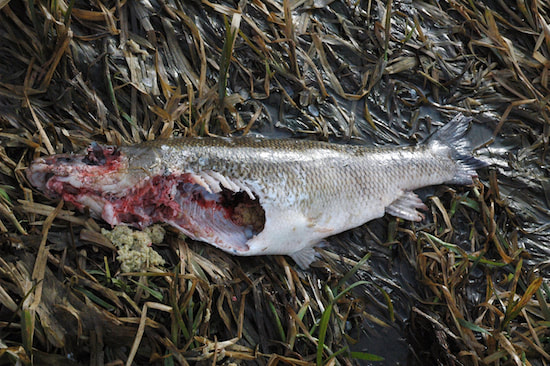 Large barbel taken by an otter. Picture from Angling Trust The only disadvantage is that otters do like to eat fish, which can upset some anglers. Seeing some posts on social media it seems that to many anglers the only good otter is a dead otter. We at RWF think the argument is a bit more nuanced than that. A recent study has found that the majority of the otter's diet consists of smaller fish such as minnows, bull heads and stone loach. This does not mean that otters do not take larger fish but that they are not likely to be stripping a river of it’s large fish such as barbel as anglers claim. This article from Martin Salter of the Angling Trust makes just this argument.
may have to accept that this will not be a commonplace in an environment shared with a top predator. It could be that if anglers lower their sights a little they may not have such stupendous catches but they will see they are sharing the river with a magnificent beast. 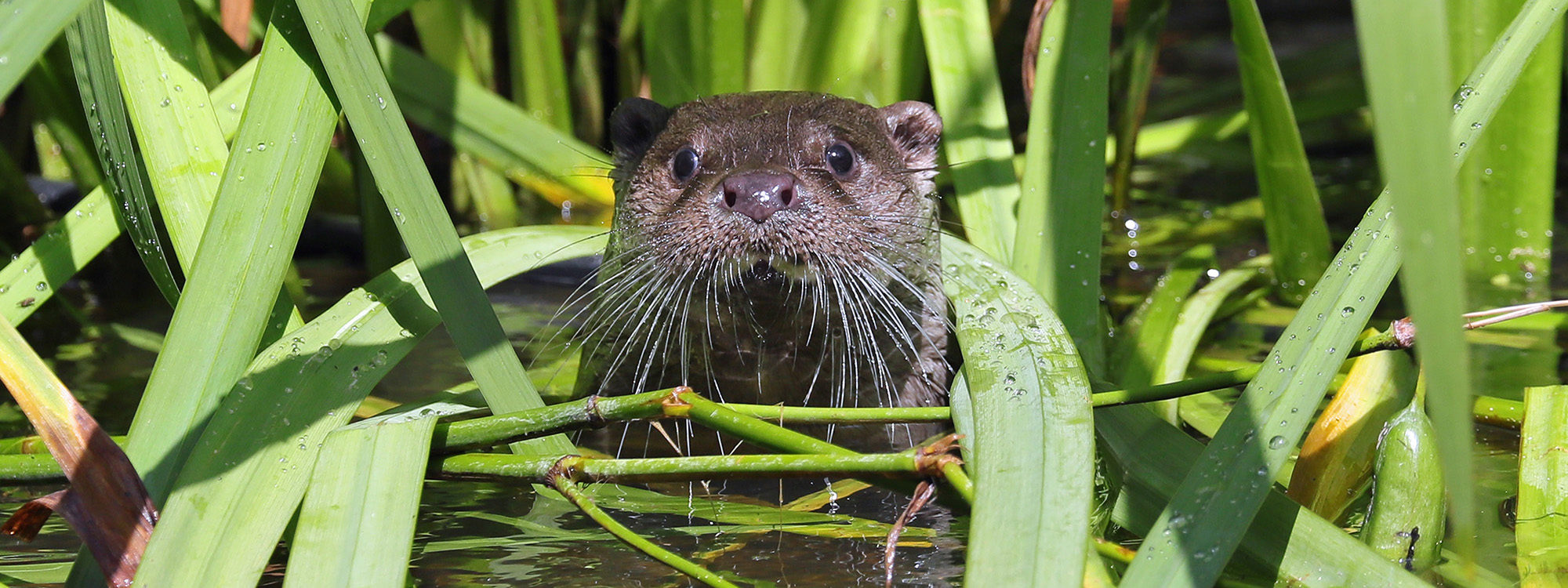 Picture courtesy of Wildwood Trust In last week's blog we heard from Sue Patchett why she is a regular litter picker, in this one we hear from her side kicks John Tickner and Chris Tribe.  John worked hard to retrieve this trolley which was embedded in the river silt.
rubbish that gets dumped, but it's rewarding to be able to stand back afterwards and admire a cleaned up stretch of riverbank. We live in hope that seeing a cleaner river will encourage more folk to appreciate it and treat it with respect." 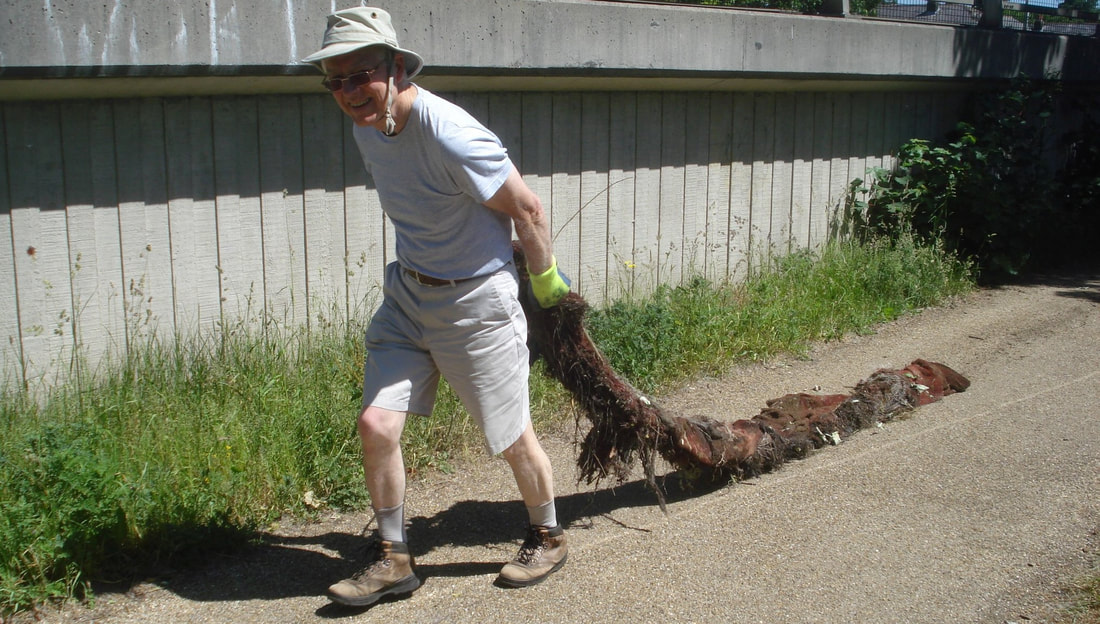 John with something disgusting he has pulled from the river! Finally why does Chris Tribe do it: "My interest in the river came about because as a fly fisherman I fish it regularly and I was impressed at how the river in Keighley is a corridor of nature running through an otherwise urban landscape. I regularly see Dippers, Wagtails, Kingfishers and other wildlife and of course the Brown Trout and Grayling are beautiful. So I’m proud of the Worth but the litter, business debris and fly tipping along it’s banks sometimes make it look like a rubbish tip. I think the river and the people of Keighley deserve more. That’s one reason I turn out regularly to litter pick".  Chris fishing a beautiful stretch of river close to the centre of keighley.
"Plastic pollution of our seas is at catastrophic levels. Between 4.8 to 12.7 million tonnes of plastic enter our oceans per year (Science Journal 2010) and it is estimated that between 1.5 to 2.4 million tonnes originate from rivers Working on the green principle of “Think globally, act locally” it seems the right thing to do to stop the plastic in our river getting any further downstream. That's why I litter pick".  If we don't get it, next stop North Sea. (You can just see John at the back). If you would like to be part of making the river and Keighley a better place please contact River Worth Friends  Litter picking seems to be flavour of the month at the moment, everyone seems to be at it! There may be a number of reasons for this, one may be that during the lockdown people got out walking, this meant that the litter was more evident to them, it’s easy to drive by rubbish without thinking about it but when you are walking through it it’s a different matter. There may also be some political reasons for it’s popularity. We at RWF have been litter picking for a while so we thought it might be interesting to hear from some of our regular pickers why they turn out every week. First up is Litter Picker-in-Chief Sue Patchett: "I’ve always had an interest in wildlife and nature and over the years have started to try and do my bit to help with conservation issues. Things seem to have snowballed and I’m now a bit of an eco-warrior involved with so many different things. I caught the litter picking bug when I joined Friends of Park Wood, it was always satisfying to have a work party and leave the wood looking in the natural state it should be. No-one wants to go for a wander around a pretty woodland and see other peoples’ litter everywhere, it’s depressing and some litter can also be a hazard to wildlife so it’s best it isn’t sprawled around our countryside. Also litter picking is a bit like toad patrolling, it’s addictive. I’ve been toad patrolling for 17 years and run Riddlesden Toad Patrol. When you’ve been at it a long time your eyes are trained to spot toads at a distance and once you get into litter picking the same thing happens, you tend to notice all the litter that’s around and then feel an urge to do something about it. I’ve litter picked with many groups and have run plenty of my own community litter picks including getting the toad patrollers out! It is good to see other people have community pride and join in and also by having community litter picks it encourages people to join who wouldn’t have considered going out alone to do it".
as I knew he was keen on the river. This is how the litter picking aspect of River Worth Friends blossomed, we ended up doing weekly litter picks along the river and eventually when other people saw what we were doing they wanted to join the party and everything gained momentum".
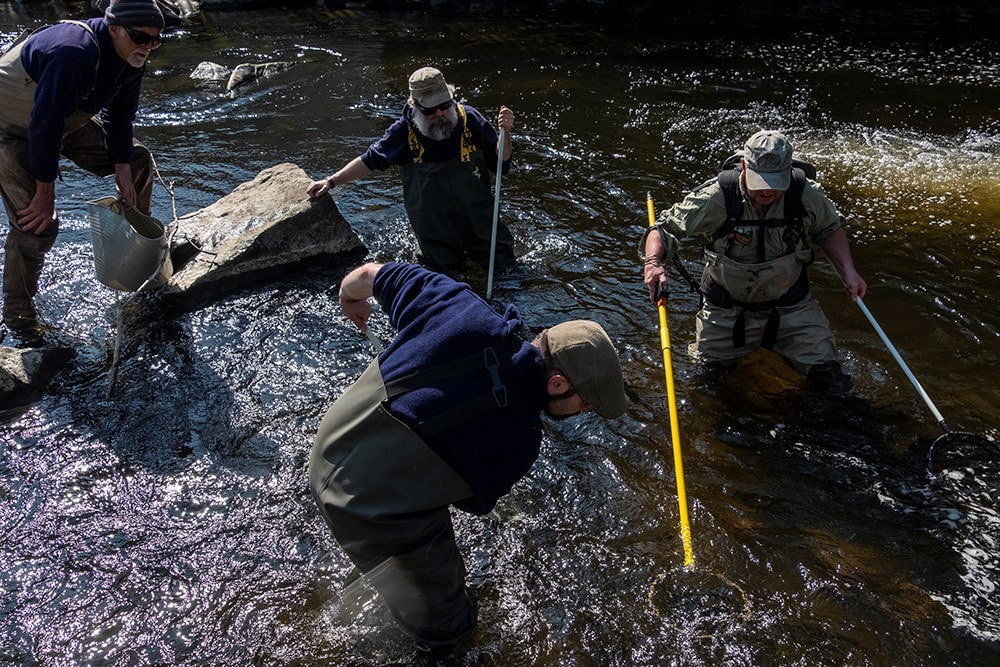
impact in the sea and sealife can be dying and suffering needlessly. I might not be able to save the planet but I like to pitch in and try and help. A weekly river clean up isn’t much hassle and when there’s a team of you out a lot can be achieved. Teamwork makes the dream work!" 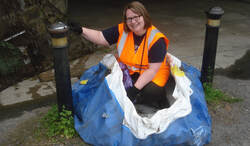 In the next blog we will hear from Sue's lieutenants John Tickner and Chris tribe.  Earlier this month River Worth Friends and the Aire Rivers Trust electro-fished parts of the River Worth to survey the fish populations in the river. We were surveying to try to get an idea of where fish are distributed and how the many weirs affect the population. Once we have a better understanding of this we would like to remove or adjust some weirs to enable easier fish migration. The survey was led by Professor Jon Grey of the Wild Trout Trust and Lancaster University who has much experience with electro-fishing and assessing fish populations. Electro-fishing involves passing an electric current through the water which momentarily stuns the fish, making it possible to net them. You have to be quick with the net as they recover quite quickly. We surveyed five stretches, each about 50 metres long, and passed through those stretches three times so theoretically we should get fewer fish with each pass. The procedure is that Jon uses a battery pack and electrode rod to create the current, sweeping from side to side across the river. Two assistants then catch any fish that emerge and place them in a bucket carried by a third assistant. After three passes the fish are counted and measured before being released back into the river unharmed. One of the tricks with this is to not put your hands in the water whilst Jon has his finger on the button!
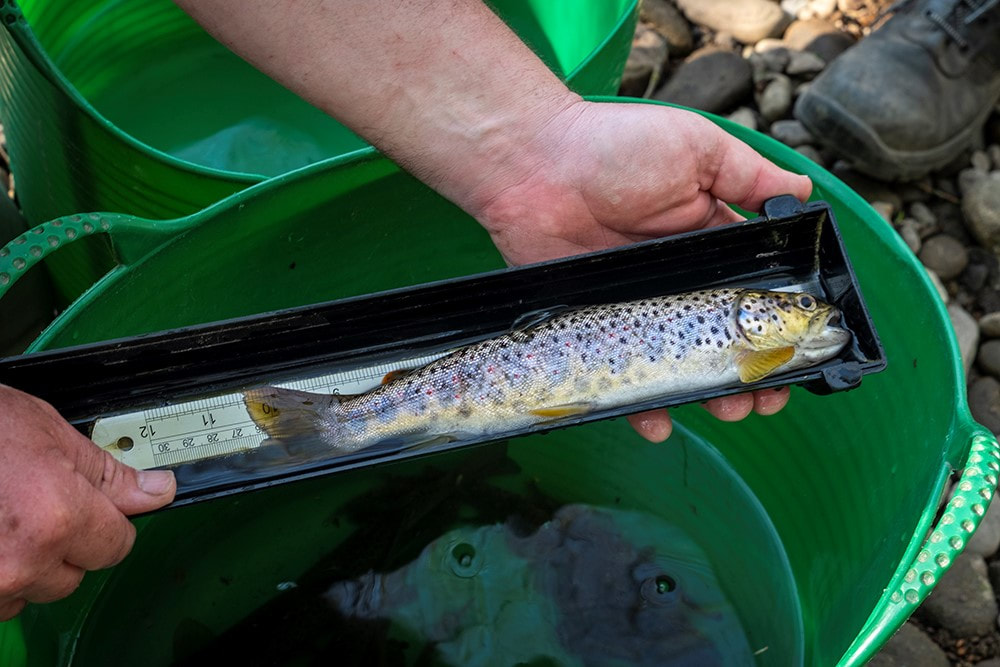
We found six different species of fish during the survey, our main interest was in the two larger species we know are present from anglers reports, brown trout and grayling. We did find brown trout but not a single grayling, which is a bit of a mystery. The other species were bullhead, stone loach, brook lamprey (see our previous blog on these interesting fish), minnow and the odd three-spined stickleback. We sampled sites from close to the confluence with the Aire near Kinara Close up to Damems. The distribution of brown trout was interesting with much better numbers downstream of the lowest weir (which we call Malcolm’s weir - above the A650 overpass) and in the better habitat upstream at Damems. In between all the weirs, there were relatively few. . This pattern was also apparent for bullhead, which has similar requirements for habitat and water quality as trout. Minnow and stone loach appeared affected by the weirs; their numbers were restricted to the sites downstream. Stickleback probably came in from the mill goit at Marriners Rd.  Bull head and stone loach. Prof. Grey is still analysing the results but we are hoping they will help us in planning our future work on the river. It appears that the weirs are having an impact on fish populations, hindering them from colonising from the Aire. However, the picture is complicated – it appears that there are well-established populations of resident trout and bullhead above the weirs which are more likely responsible for the fish that we caught in between the weirs We have some funding which we would like to use to make at least one of the weirs passable for fish, this would assist fish migration for breeding purposes, for feeding, and to recolonise following pollution or heavy flood events.  Close up brown trout really are beautiful fish. River Worth Friends have various conservation activities aimed at improving the river habitat, if you would like to get involved please contact us, we would be pleased to hear from you. All pictures are copyright of RWF member John Tickner.
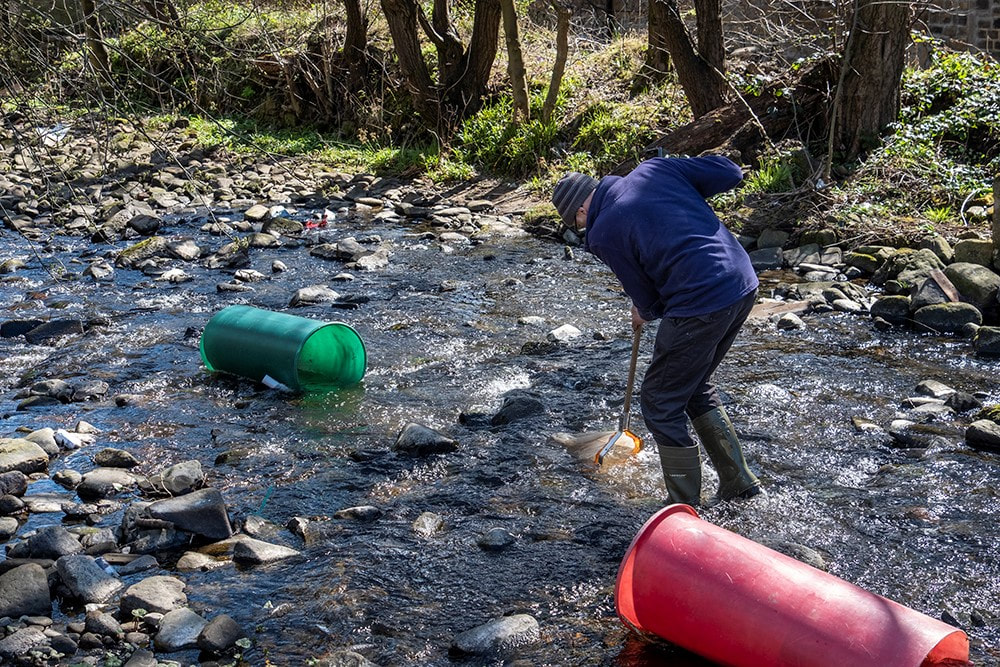
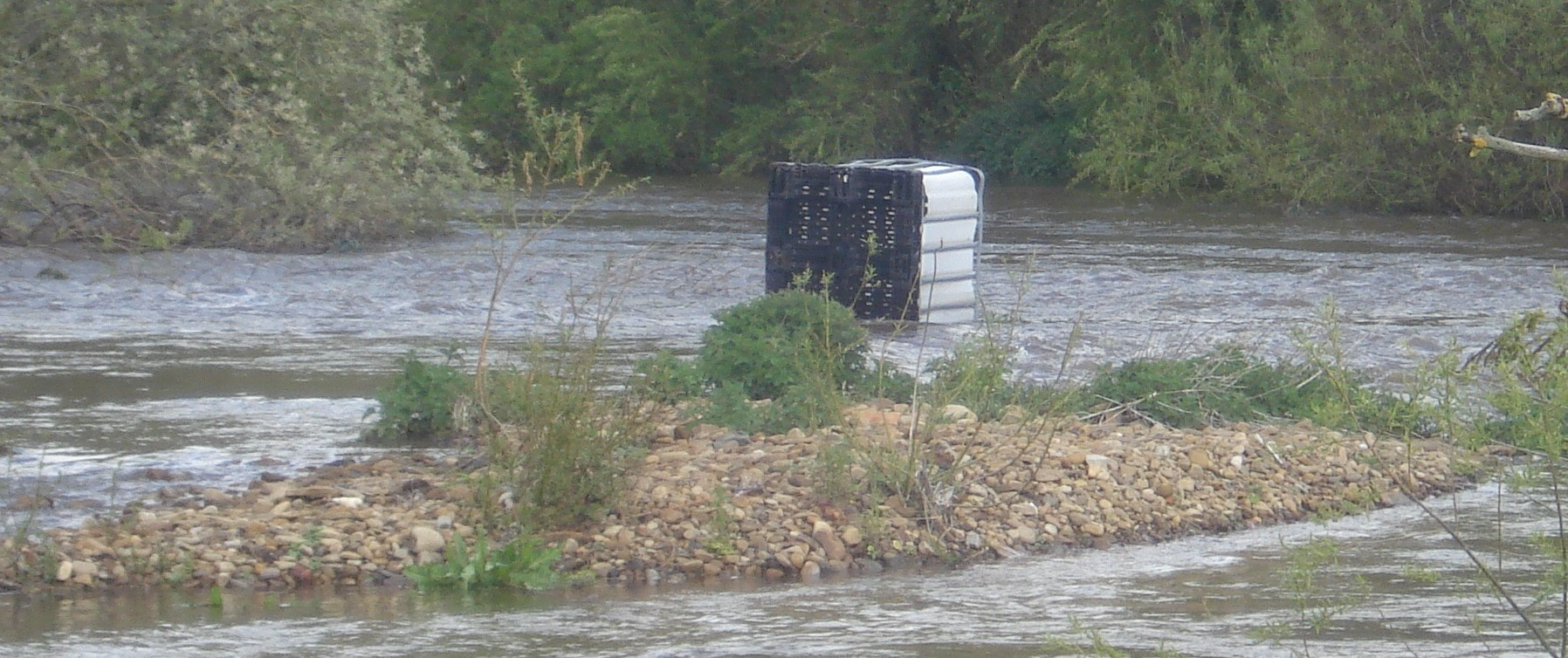 Back in March RWF member Sue Patchett spotted a large plastic container, probably a water bowser, in the river above Low Bridge and suggested that we should try to remove it. Somehow we never got round to it. A couple of weeks ago it was spotted it in the river below Low Mill Bridge and we thought we should do something. Unfortunately access to the river is very difficult there and we were planning on getting a better look at it then the rains came last week and the container is now in the River Aire at Riddlesden. So we we rather regret that we missed our opportunity to remove it and it will make it’s way eventually to the sea and add the millions of tons of plastic debris that will wash around in our oceans for thousands of years.
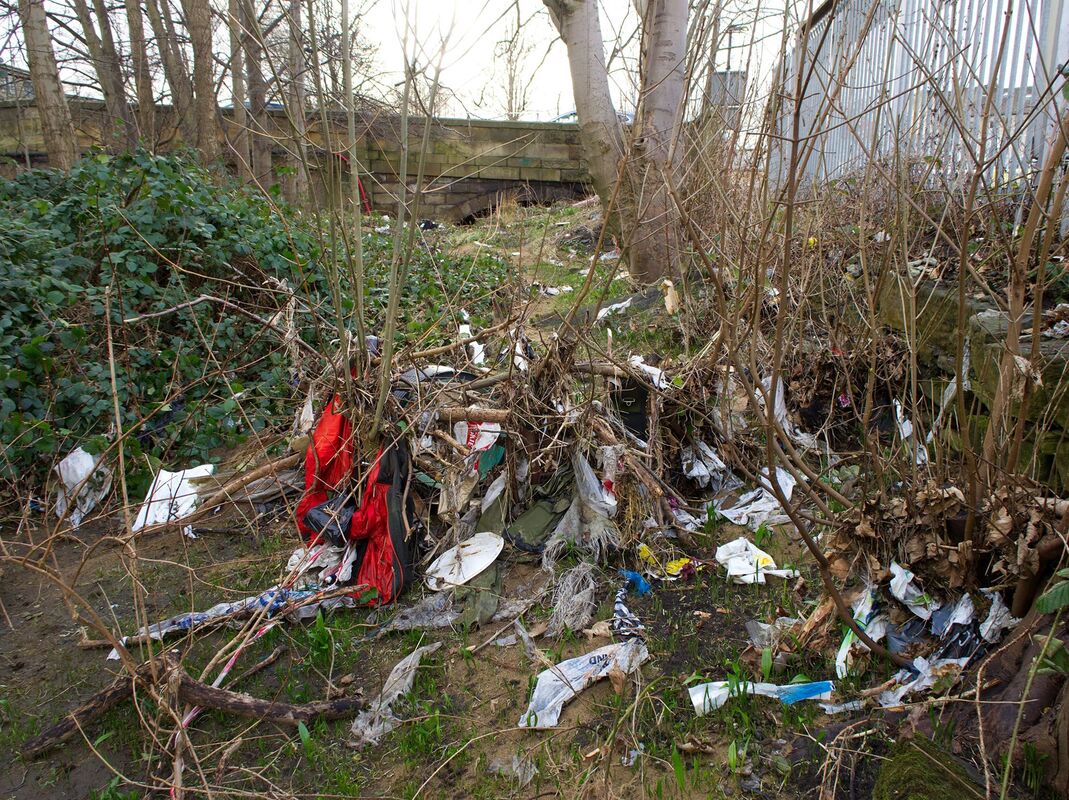
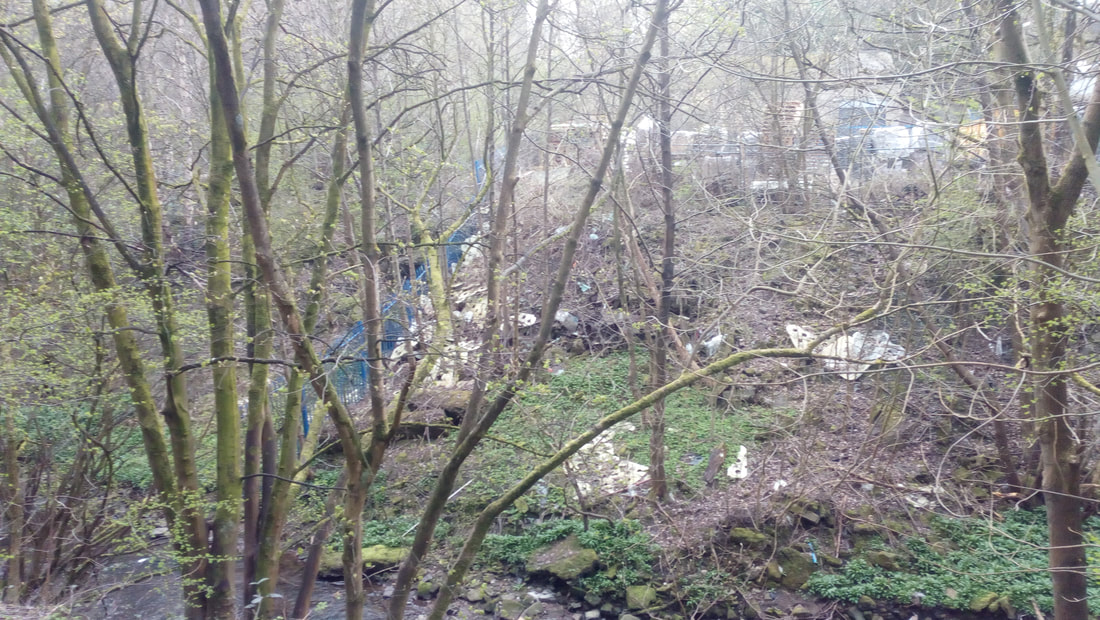
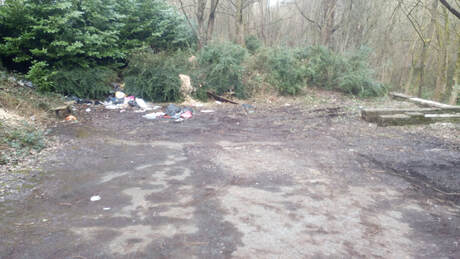
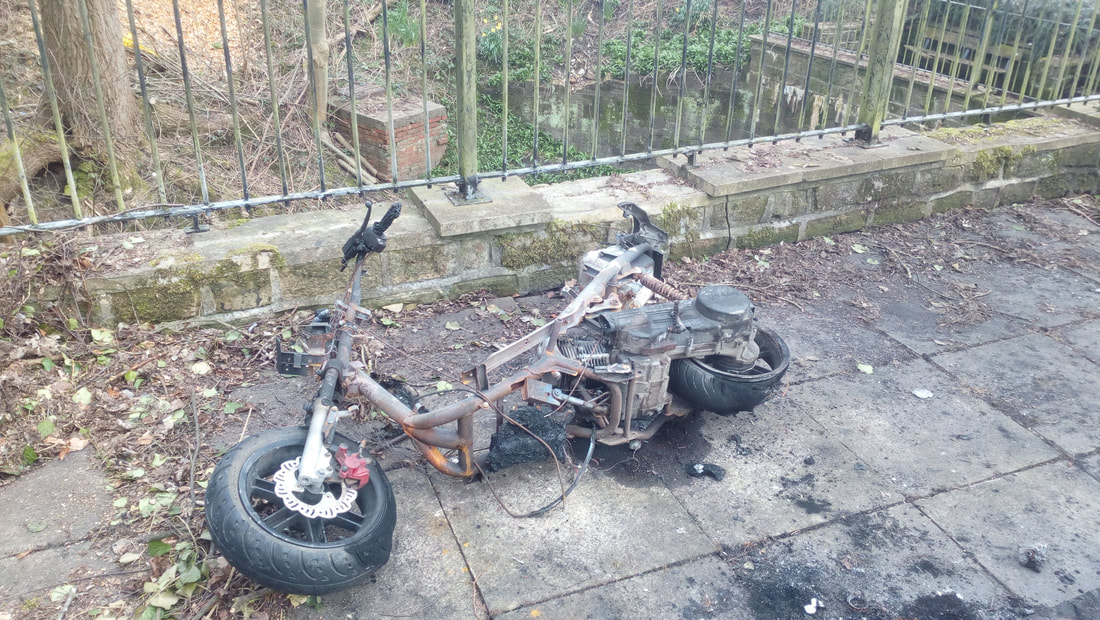
So how did it get into the river in the first place? We hope it was not dumped intentionally, more likely it accidentally fell or was blown into the river from an adjacent businesses yard. We have noticed this happening at various places along the river and have worked with some responsible businesses to prevent debris entering the river. For instance we found large sheets of plastic coated cardboard in the river upstream from the bypass bridge, they had blown in from an adjacent yard, Harrisons Bathrooms. We cleared the cardboard and spoke to the yard manager who agreed to increase the weighing down of the sheets. Fortunately Harrisons is a good, well organised and responsible yard so the sheets were probably just a one off. Other yards are not so responsible, we notice debris down the bank from another yard above Low Bridge, it is possible the large container also can form there. There is also debris down the bank of North Beck at Postman’s Walk, RWF and BCMBC will be working with the yard owners to clear this next month.
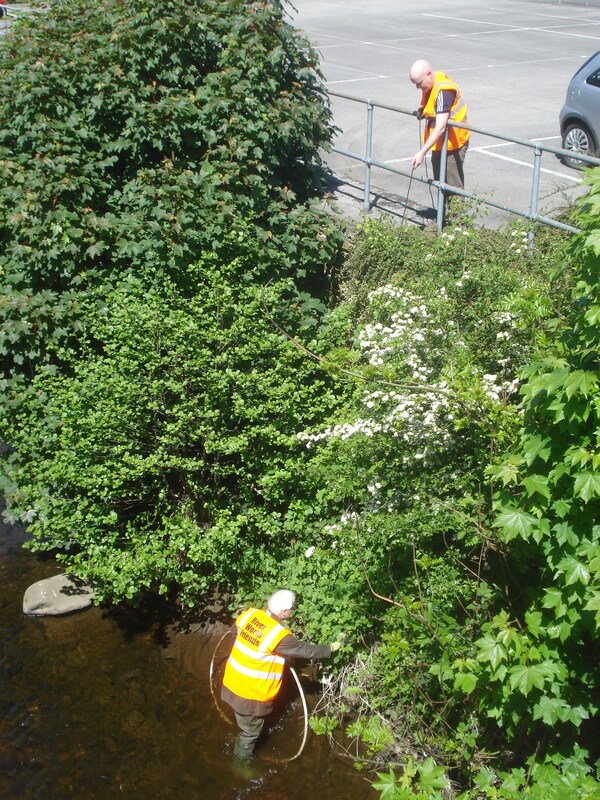
We would ask businesses along the Worth to take pride in the beautiful natural resource on their doorstep and take precautions to ensure debris cannot get into the river. If by accident stuff does get into the water, please take steps to remove it, don’t just let it go. If anyone sees debris in the river please report it to us and we will endeavour to to have it removed.
Postman's Walk Pocket Park Project Begins When you mention Postman’s Walk, most people initially reply with “Where’s that in Keighley?” As you explain it is the section of North Beck, next to the Postal Sorting Office, on Oakworth Road, most local people usually give a look of amused horror, with the Keighley community recalling its reputation for litter, anti-social behaviour and being a general “Grot Spot”.
Given this reputation, Green Recovery Challenge Funding has been awarded to Aire Rivers Trust to carry out habitat improvement work on the site. Using money from the Department for Environment, Food and Rural Affairs (DEFRA) via the National Lottery Heritage Fund we will be working with the City of Bradford Metropolitan District Council and The River Worth Friends and other local community groups, aiming to enhance the area both as a leisure amenity and wildlife haven. Indeed, we are looking to work with as many local organisations as possible throughout the project, hoping to co-ordinate their activities with River Worth Friends, which the Aire Rivers Trust works in long term partnership with. The intention being to bring real long term improvements to the the North Beck and Postman’s Walk area. If you or your organisation are interested in becoming involved with the site, please contact the project officer: Sam Riley-Gunn [email protected] Tel. 01274 061902
If you know of a local community group which would like to be involved with this excellent and worthwhile project please contact Sam Riley-Gunn on 01274 061902 or email [email protected]  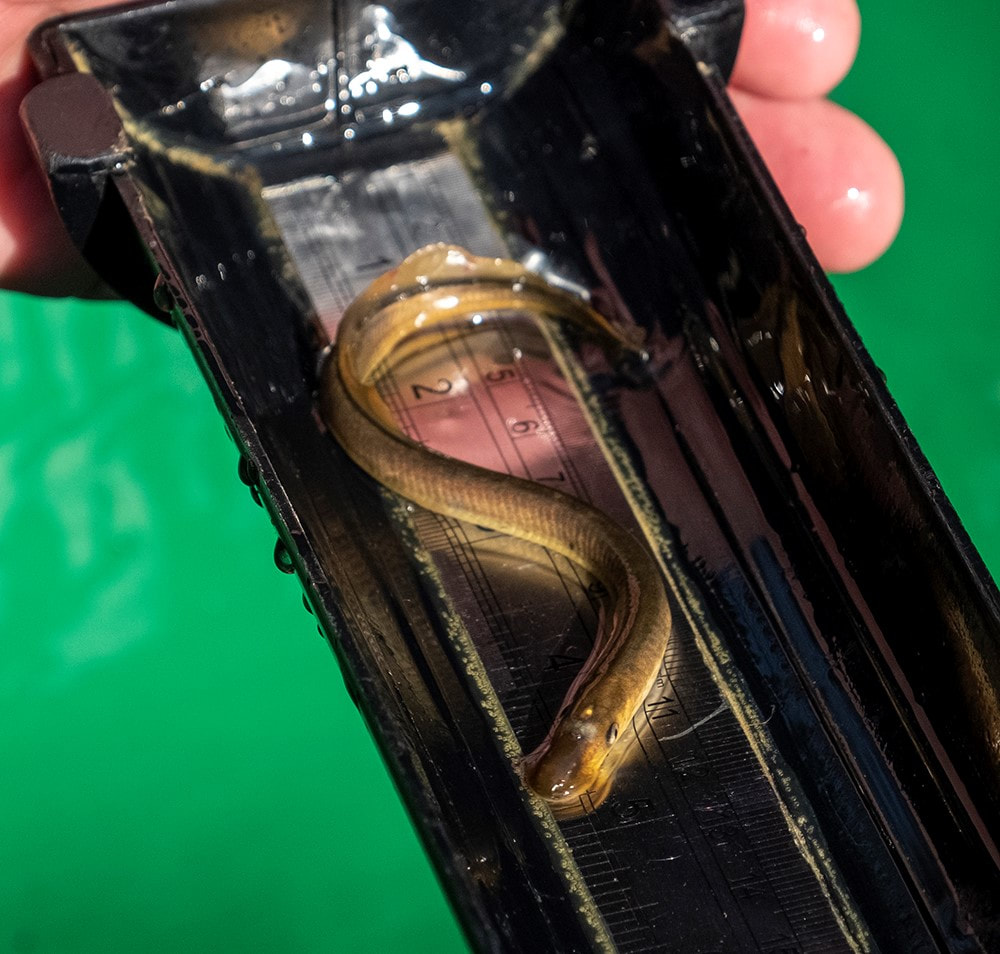 A brook lamprey caught in a RWF monitoring exercise on the Worth. We have mentioned lampreys a couple of times in blogs and facebook postings recently, we we though some might be thinking WTF is a lamprey, so here’s a bit more information about them.
The sea and river varieties are carnivorous, having the unpleasant habit of attaching themselves to fish with their sucker mouth and boring into the body to eat the blood and flesh, ugh! On the Worth you will be pleased to know that we just have the brook lamprey which is not so disgusting as it feeds by filtering organisms out of the water, in fact it doesn’t eat at all in the adult stage. How do they live? Lampreys have two stages, a larval stage and an adult stage. After hatching the larvae drift down stream until they come to a suitable sandy/silty river bottom which they burrow into. They will remain there for five to six years feeding by filtering organisms from the water around the mouth of their burrow. They grow from 3-5mm to 12-15cm before changing into the adult form.
One of the problems lampreys face on the river (as well as the herons!) is the number of weirs. These act as a barrier to migration and may be limiting the population, mind you this also applies to other fish such as trout and grayling. River Worth Friends are keen to have some of these weirs removed if possible. Main top photographer copy write of RWF member John Tickner.
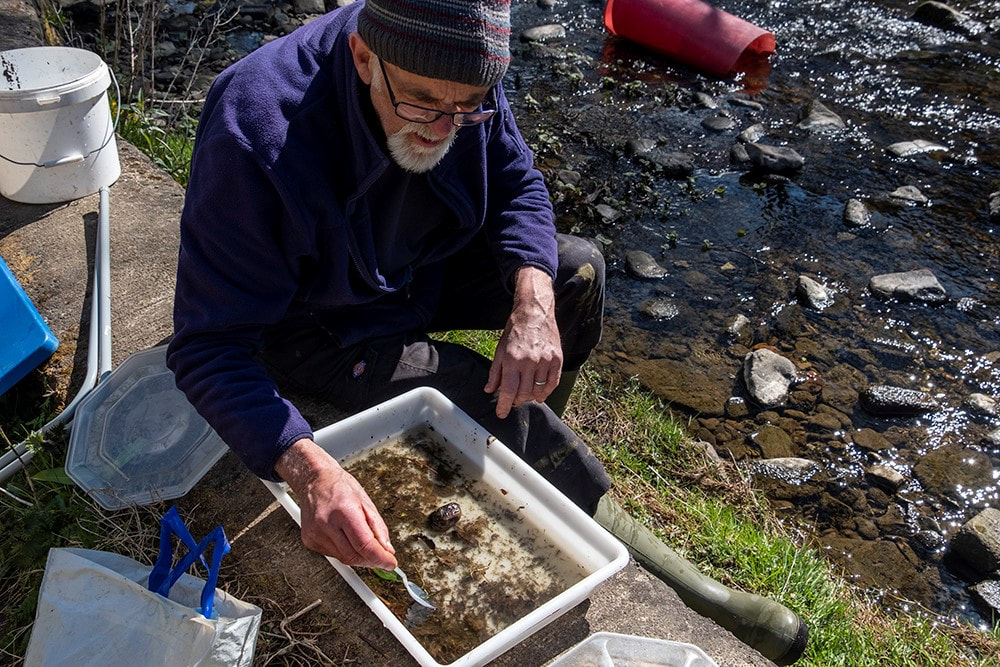
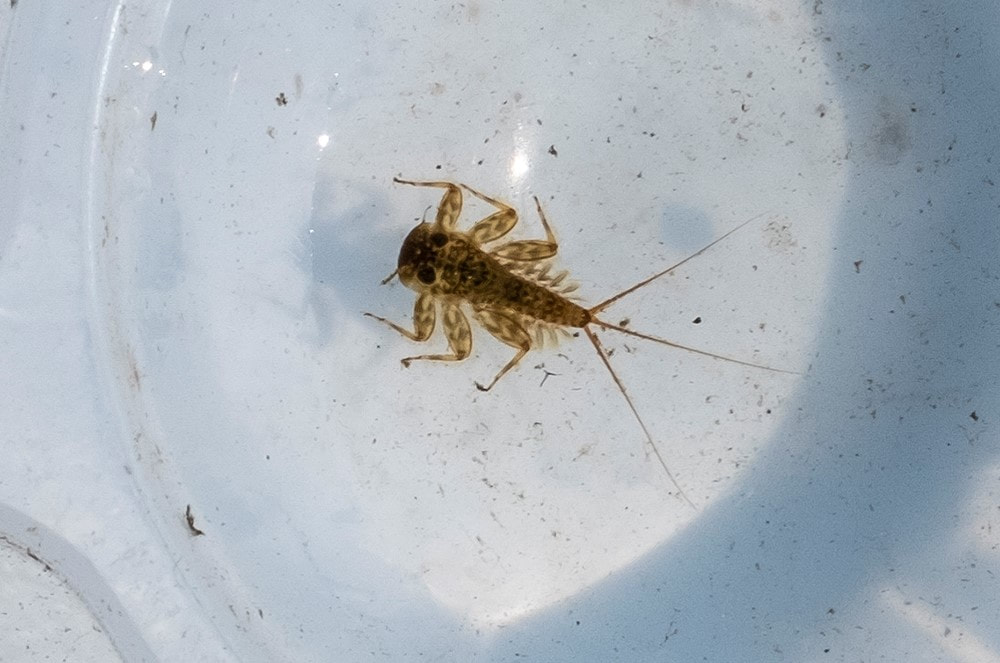
Lampreys spawning - Dr Will O'connor. Heron with lamprey - Clive Daelman. If you want to know more there is a good exploration of all three UK species here.  Stone fly nymph. Stone fly nymph. On Monday, as part of our survey of the river Worth and it’s tributaries, we were out kick sampling. This is a way of finding out what invertebrates (bugs) are living in a river. Most river flies live as flies for only a short period, sometimes for only a day. However they may live as bugs in the river for over a year before hatching into flies. We want to know more about bugs in the river for two reasons. Firstly a healthy bug population should lead to a healthy population of their predators like Dippers, Wagtails and Trout. Secondly the bugs are a very good indicator of the quality of the river water, they are very sensitive to pollution so lots of bugs means clean water.
The invertebrate pictured at the top of the blog is a Stonefly nymph from North Beck. We had trouble identifying it because it is a much larger species then we usually get, we have not seen one this size before (about 25mm). Sampling in this way is a great way to learn more about rivers and their ecology. It's also a return to childhood and messing about in the water! If you or your kids would like to get involved in this project please contact us. 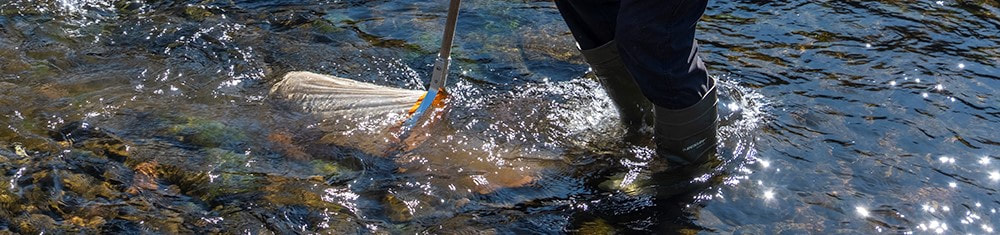 All photographs copyright of River Worth Friends member John Tickner, except the Baetis nymph.  This week's blog is by written and photographed by RWF member John Tickner (all images are copyright to him).
The daffodil, today one of the most familiar of garden and roadside verge plants, was once as common in the wild. However, many that we see nowadays are either planted or escaped garden varieties. The wild daffodil has narrow, grey-green leaves and a familiar daffodil flower, but with pale yellow petals surrounding a darker yellow trumpet; this two-tone look is a starter to tell them apart from their garden relatives. The wild daffodil is also relatively short and forms clumps, carpeting the ground. 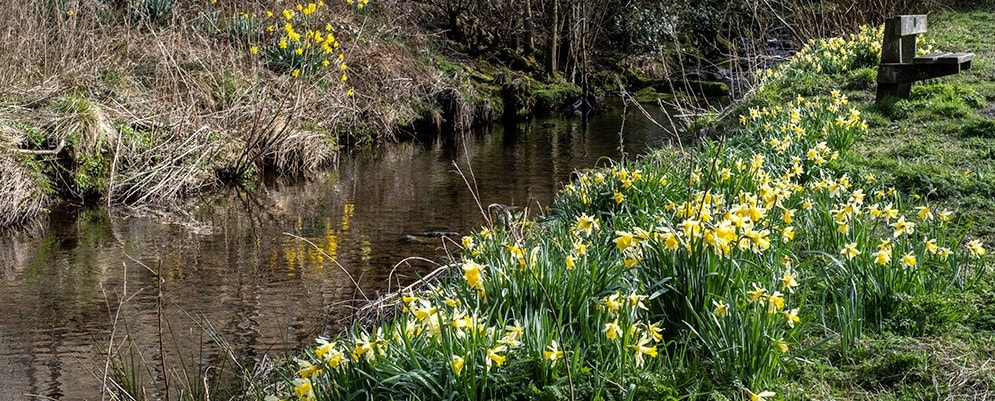 Daffodils by the beck.
From one extreme to the other, it is only too easy to pass the tiny common wall cress without noticing. It’s the lichens and mosses that colonise a wall first, they then trap particles of dirt that allow slightly larger plants to get a foothold and move in with them.  Common Wall Cress.
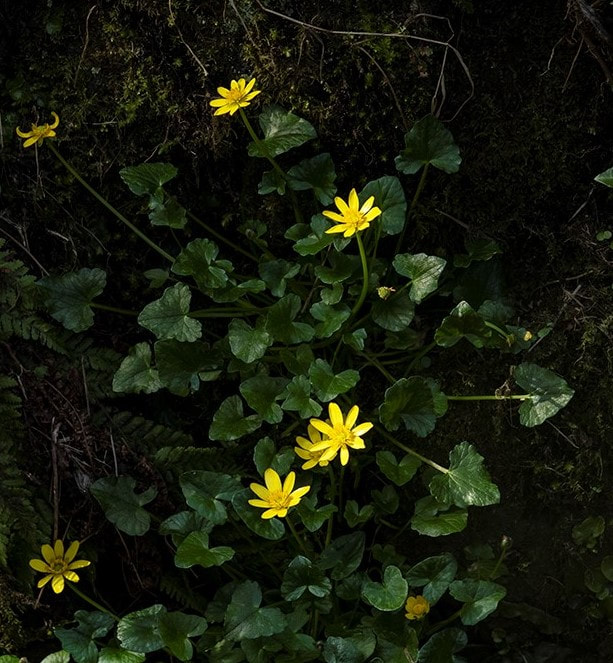
My final offering is the ever popular primrose. A familiar spring plant of woods, hedge banks and grassy places, it is sadly less abundant than it used to be possibly as a result of over-picking. Which leads me to an appeal to please enjoy our wild flowers where they are, please leave them both for others to enjoy and to give them a chance to multiply and thrive. If you spot any unusual flowers while walking our river, or indeed see a particularly special show put on by one of the more common varieties, RWF would be pleased to hear from you as we try to grow our knowledge of our river and wildlife. Images courtesy of RWF member John Tickner.  Primrose. |
Categories |




















 RSS Feed